
13 Low-Risk Sports Betting Strategies Explained With Math and Examples
This comprehensive guide explains commonly discussed low-risk betting approaches used by sports bettors, with a focus on football and other popular sports.
Complete the quiz and find out which betting strategy is the best for you:
What is your starting bankroll?
Wagering on football in a sustainable way over the long term requires combining probability-based strategies, disciplined bankroll management, and tools that help compare odds across bookmakers.
Rather than eliminating risk entirely, the approaches discussed below aim to reduce exposure to unfavorable outcomes by structuring bets mathematically.
Some strategies focus on balancing outcomes within a single market, while others rely on identifying pricing inefficiencies offered by sportsbooks.
Low-risk betting methods seek to improve long-term expected value, not to guarantee profits or remove uncertainty from wagering.
⚠️ Important Legal & Risk Disclosure
Sports betting laws, regulations, and permitted practices vary significantly by country, state, and jurisdiction. The information on this page is provided for educational and informational purposes only and does not constitute financial, legal, or gambling advice.
Sports betting always involves financial risk, including the possibility of losing part or all of the money wagered. No betting strategy, software, or method can guarantee profits or consistent outcomes.
Some strategies discussed may be restricted, limited, or discouraged by certain bookmakers, and availability depends on local laws, bookmaker terms, and individual account status.
Readers are responsible for ensuring that any betting activity they engage in is legal in their location and complies with the terms of the betting platforms they use.
How to minimize downside in football betting
One way bettors attempt to limit downside risk is by using matched betting or arbitrage-based approaches, which focus on covering multiple outcomes of the same event.
These methods are designed to reduce variance, but they still depend on correct execution, available odds, and bookmaker rules.
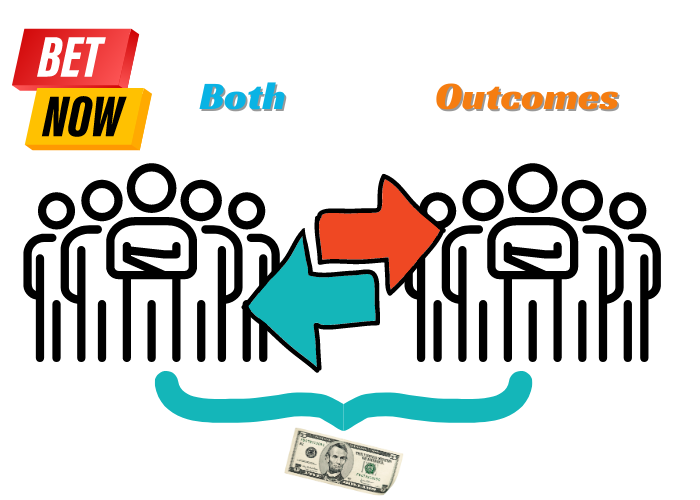
Below I also mentioned certain betting techniques rely on basic mathematical principles to balance exposure across outcomes, although results can vary depending on odds accuracy and market conditions.
1. Using bookmaker bonuses with matched betting
Matched betting is often described as a low-risk introductory strategy because it focuses on bookmaker promotions rather than predicting match results.
By placing opposing bets on the same event, bettors aim to neutralize the result of the sporting outcome itself.
This approach is frequently used as an educational entry point into probability-based betting systems.
Why matched betting is considered beginner-friendly
Matched betting attempts to reduce reliance on match predictions by structuring bets so that the outcome of the event has limited influence on the final result.
Any remaining profit or loss usually depends on odds differences, exchange commissions, and promotional conditions.
To approach break-even or small positive outcomes, bettors must find closely matched odds, which typically result in a small qualifying loss before bonuses are applied.
Odds comparison example for matched betting (illustration)
By covering both sides of a market, one side of the wager will settle as a win, while the other offsets it according to the odds used.
Matched betting is often described as low risk only when bookmaker terms, wagering requirements, and stake calculations are followed correctly.
The core principle of matched betting can be summarized as follows:
If a bettor places a qualifying bet using a bookmaker bonus and simultaneously offsets the opposite outcome elsewhere, the goal is to meet wagering requirements while limiting exposure to match results.
Using bonus offers responsibly
Matched betting does not remove risk entirely.
Mistakes in stake sizing, odds changes, or bonus conditions can result in losses.
For this reason, matched betting should be approached as a structured process, not a guaranteed method.
Related background: how identity verification requirements differ across betting platforms and jurisdictions.
Availability, verification requirements, and account controls vary by operator and jurisdiction. Practices described here are informational only and may not be accessible or legal in all regions.
When executed carefully, matched betting aims to recover the initial stake and bonus value, but outcomes depend on market availability and bookmaker restrictions.
This method is sometimes referred to as bonus utilization or bonus conversion, and it is commonly used during the early stages of a bettor’s learning process.
Finding suitable odds combinations can be assisted by odds-comparison or matching tools, which help identify closely priced markets.
Example of an odds-matching tool (illustration)
If you follow the links below, you can find independent reviews of tools designed to help compare odds for matched betting purposes.
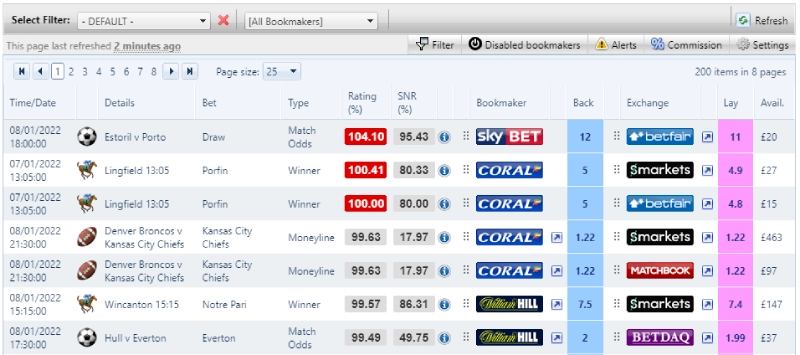
I personally used matched betting as a structured learning method over an extended period, primarily to understand odds mechanics and bonus terms, not as a permanent betting solution.
It helped me learn how bettors attempt to reduce short-term variance when engaging with promotional offers.
Who matched betting may be suitable for
Matched betting is typically considered suitable for bettors with limited starting capital, access to regulated bookmakers, and the ability to follow detailed instructions carefully.
It may appeal to individuals who prefer process-driven approaches rather than prediction-based betting.
2. Understanding arbitrage betting and odds discrepancies
Arbitrage betting is another strategy often discussed in the context of risk-reduction, rather than risk elimination.
This approach focuses on identifying temporary pricing differences between sportsbooks on the same event.
Arbitrage betting does not rely on bonuses, but it does require precise execution, sufficient liquidity, and access to multiple bookmakers.
I used arbitrage betting earlier in my betting journey before transitioning to higher-variance strategies such as value betting, which carry greater risk.
You can check our value betting simulator to have a better understanding on how variance can cause huge swings, losing streaks.
Example of an arbitrage structure (illustration)
Arbitrage betting aims to balance potential outcomes by exploiting odds discrepancies, but execution errors or stake limits can still result in losses.
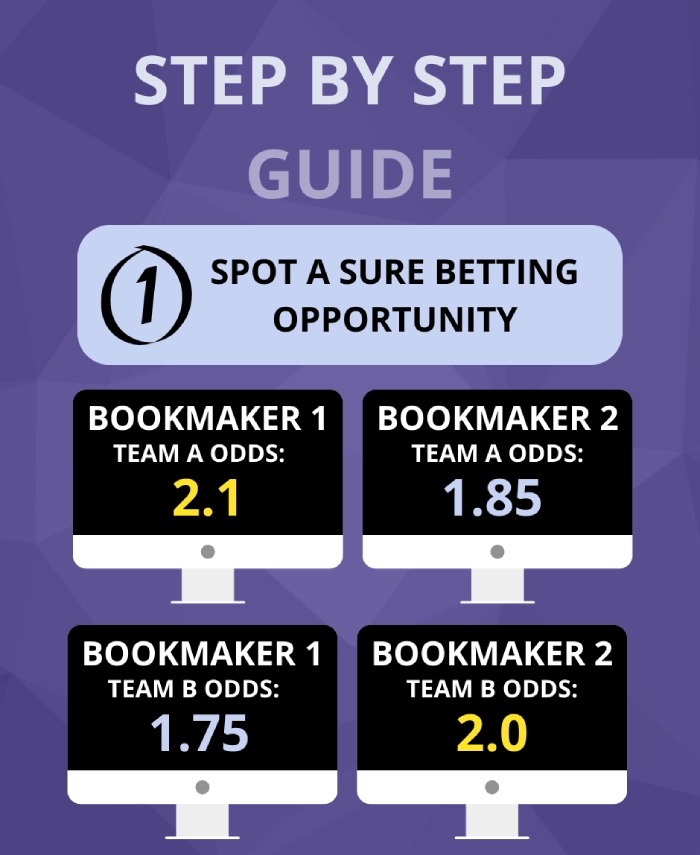
Bookmakers can occasionally post different prices on the same market due to timing differences, trading models, or manual adjustments.
These differences may create situations where the combined odds imply a theoretical edge, though such situations are often short-lived.
Sharp bookmakers tend to correct prices quickly, which is why arbitrage opportunities are not consistently available across all markets or regions.
Access to certain sportsbooks may be restricted depending on local regulations and account verification requirements.
Why arbitrage is considered lower risk (but not risk-free)
For example, if one sportsbook offers odds of 2.05 on “Over 3.5 Goals” and another offers similar odds on “Under 3.5 Goals,” a bettor may attempt to structure stakes to reduce exposure to match outcomes.
Such situations are commonly referred to as arbitrage or “sure-bet” scenarios, although they still involve operational and execution risk.
Odds discrepancy example (illustration)
To participate in these strategies, bettors often rely on arbitrage-finding tools that scan markets and assist with stake calculations.
Even with tools, success depends on speed, accuracy, and bookmaker account limits.
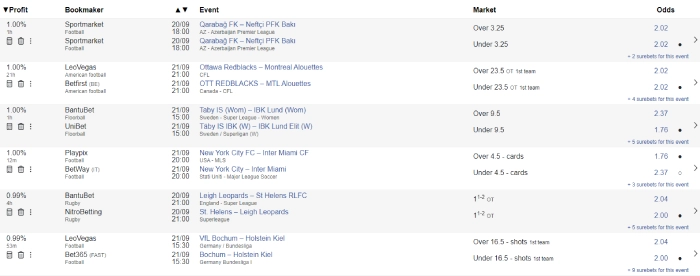
Who arbitrage betting may be suitable for
Arbitrage betting may suit experienced bettors with access to multiple sportsbooks, an understanding of odds math, and the ability to manage operational constraints.
You can read a more detailed explanation of how to find sure bets are identified in the dedicated guide linked here.
3. Courtsiding and information-based betting risks
Courtsiding is often described as an information-timing strategy, but it carries significant legal, ethical, and account-related risks.
While some bettors discuss courtsiding as a theoretical edge, it is restricted or prohibited by many sportsbooks.
Courtside betting has potential advantages related to information speed, but it also carries serious downsides, including account closures and voided bets.
This approach relies on receiving real-time information faster than a sportsbook updates its markets.
When a bettor acts on information before odds are adjusted, the sportsbook may void the wager or restrict the account, even if the bet was technically placed.
To attempt courtsiding, a bettor would need exceptionally fast data access, often through live attendance or specialized feeds.
However, sportsbooks actively monitor for such behavior, and most accounts engaging in it are eventually restricted.
While sportsbooks can occasionally lag in updating odds, exploiting these delays violates the terms of service of many operators.
For this reason, courtsiding should be understood primarily as an example of market inefficiency, not as a recommended betting strategy.
4. Evaluating tipster platforms with established track records
Is following tipsters a zero-risk football strategy?
- Following tipsters is not a risk-free betting approach, but some platforms attempt to reduce information asymmetry by publishing transparent performance data.
- On reputable platforms, each tipster typically has a verifiable betting history that can be reviewed by users.
- This historical data helps limit the ability to retroactively alter or selectively present results.
- By reviewing long records, it becomes clear that even experienced tipsters experience periods of gains and drawdowns.
- Most professional tipsters focus on long-term performance metrics rather than short-term results.
- Some successful tipsters identify potentially mispriced markets using probability and statistical models, which may explain their historical performance.
Is Tipstrr considered a reliable platform?
Tipstrr is commonly cited as one of the more established platforms for users interested in football predictions supported by long-term, publicly tracked betting results.
I personally reviewed the platform, including creating a tipster account, to better understand how performance data is recorded and displayed.
Based on this review, historical records appear structured to reduce manual result manipulation, though outcomes are still subject to normal betting variance.
5. Using statistical databases to support decision-making
Football statistics can help bettors better understand match dynamics and probabilities, potentially improving decision quality over time.
However, even well-designed statistical models cannot guarantee winning outcomes on individual bets.
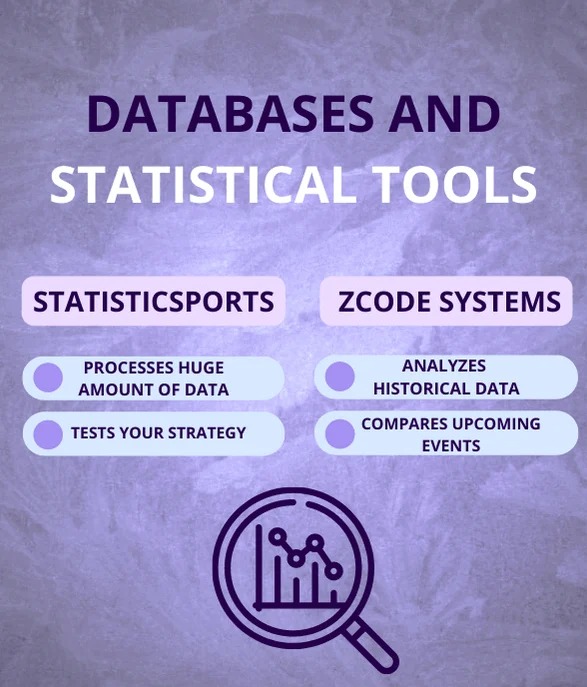
Statistical platforms often present probability estimates and modeled outcomes, rather than fixed predictions.
A common feature is the display of implied probabilities expressed as percentages, which can help users compare odds to estimated likelihoods.
These metrics are typically available for many major betting markets across upcoming events.
6. Using football odds comparison tools
Placing bets at higher odds, all else being equal, can improve long-term expected value, though it does not eliminate risk.
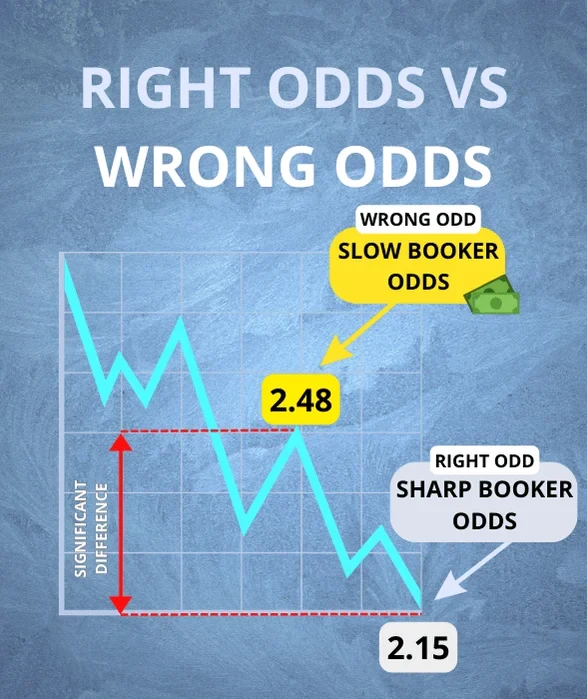
Odds comparison tools help bettors identify price differences across bookmakers, which can support strategies focused on efficiency rather than prediction accuracy.
Some platforms present odds comparison data in a way that is easy to interpret, particularly for bettors interested in arbitrage-style analysis.
These tools display which bookmakers currently offer the highest available odds for specific markets.
For example, placing a bet at odds of 2.20 instead of 2.05 increases the potential return, but does not change the underlying probability of the event.
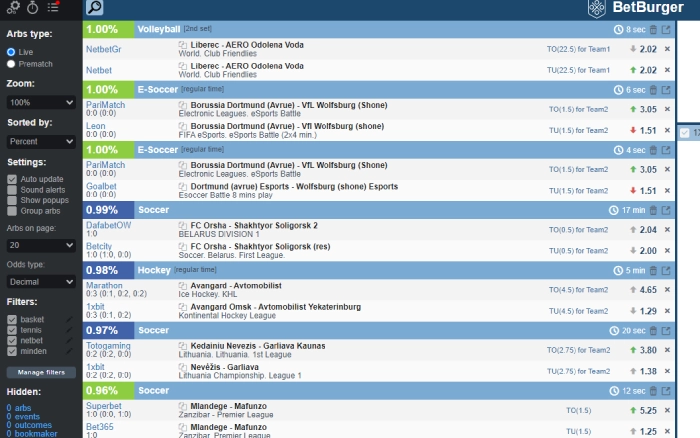
Odds comparison tools can assist in identifying pricing inefficiencies, but they do not remove bookmaker margins or execution risk.
Beyond odds selection, other factors—such as bonus conditions or promotional terms—can also influence long-term results.
For instance, using a bonus with better wagering terms may reduce effective costs for the same deposit amount.
7. Following a structured staking strategy
Even simple staking approaches, such as flat staking, are generally more disciplined than betting without a money-management plan.
The purpose of staking strategies is not to avoid losses, but to manage exposure and smooth results over time.
Winning consistently is difficult, but a well-defined staking plan can help control volatility and emotional decision-making.
Personally, I prefer flat staking based on a fixed percentage of my available bankroll.
Using a staking plan—regardless of strategy—can help limit the impact of errors and short-term losses.
By following predefined rules, bettors are less likely to increase stakes impulsively after setbacks.
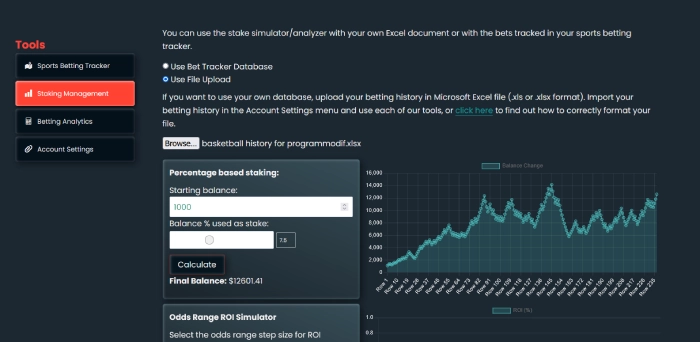
You can test different approaches using tools such as the BetMetricsLab staking simulator, which allows risk-free experimentation.
Another really helpful tool to visualize the effectiveness and risks of your strategy is our betting simulator, specifically developed for value betting strategies.
8. Developing expertise in a single sport or market
I personally followed tennis and basketball for several years before placing wagers, primarily using risk-controlled approaches such as arbitrage.
By closely observing matches and market behavior, I learned how odds react to game dynamics.
With sufficient experience, bettors may notice pricing inconsistencies earlier than casual participants.
This can occasionally provide a temporary informational advantage, though it is never guaranteed.
Consistent profitability in football betting is rare and depends on discipline, market knowledge, and realistic expectations.
Becoming deeply familiar with a single sport or niche market can reduce analytical errors, even if it does not remove risk.
Watching live streams while applying structured strategies can sometimes help identify short-lived inefficiencies.
These situations do not eliminate losses, but they may offer a modest statistical edge under the right conditions.
9. Pausing after significant losses
Strategies with higher variance, such as value betting, can lead to extended losing streaks, even when executed correctly.
Even with many years of experience, losing 10–12 consecutive bets can occur due to variance alone.
During such periods, taking a short break can help prevent emotionally driven decisions.
This pause may reduce the risk of depleting a bankroll while allowing for clearer analysis.
Bettors who expect to win every day often perform worse than those who accept variance and remain patient.
Sports betting rewards rational decision-making over emotional reactions. Unfortunately most bettors are not able to control them, as you can read in the following article on gambling as public health crisis from harvardmagazine.
10. Understanding the risks of accumulator (parlay) bets
Accumulator bets significantly increase variance and are a common reason for long-term losses, especially when odds are unfavorable.
From a mathematical perspective, combining multiple selections reduces the probability of success.
Over a large number of bets, this structure tends to magnify bookmaker margins.
Hedging or managing accumulators can reduce exposure, but does not guarantee profitability.
Some bettors explore arbitrage or value-based approaches with accumulators, though these methods require advanced execution and carry additional risks.
If you are still learning, practicing with simulated or fake-money environments can help build understanding without financial exposure.
11. Managing variance in betting
Even well-designed strategies can experience prolonged periods of negative variance.
No betting method can guarantee consistent wins, regardless of historical performance.
Losing streaks of 10–14 bets can occur, even when selections show positive expected value.

In my experience, the most effective way to manage variance is through appropriate stake sizing and bankroll discipline.
This reinforces the importance of having a clear staking framework.
Some low-margin strategies rely less on flexible staking, but operational risks still remain.
Further discussion of these concepts is available in articles on mathematical betting models.
12. Being cautious with low-odds betting
Most bookmakers operate with built-in margins, typically ranging from 3% to 8%.
When bets are evenly distributed across outcomes, this margin represents the bookmaker’s expected profit.
Consistently betting on odds that accurately reflect probabilities—or worse, undervalue them—leads to negative long-term results.
This occurs because the odds offered are lower than the true implied probability of success.
13. Avoiding loss-chasing behavior
After a losing streak, many bettors are tempted to increase stakes or abandon discipline.
This behavior significantly increases financial risk and often worsens outcomes.
Increasing stake size magnifies losses, even when a bet has theoretical value.
No betting framework eliminates the possibility of mistakes or significant drawdowns.
14. Using cash-out features cautiously
Cash-out options may appear to reduce losses, but they often come at the cost of reduced expected value.
Bookmakers design cash-out tools primarily to improve user experience, not to optimize bettor returns.
Even when a bet appears likely to lose, the original probability has not necessarily resolved, and early exits can lock in suboptimal outcomes.
