
Courtside Betting: Best Strategies & Software
Courtside betting emerged alongside the early growth of online sports betting markets.
This article examines how this activity developed, how it works in practice, and why it has become increasingly restricted over time.
In theory, courtside betting is often described as a way to place wagers using faster information than bookmakers, although real-world outcomes vary significantly and are subject to strict limitations.
What is Courtside betting?
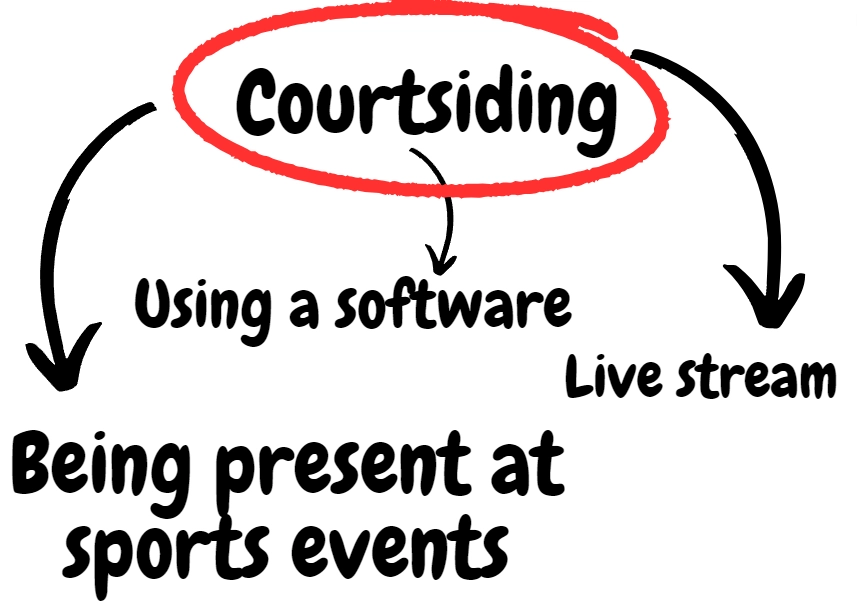
Courtside betting refers to attempting to act on live sports information before bookmakers fully update their odds or markets.
It can involve being physically present at a sports venue or using faster broadcast feeds than those available to bookmakers.
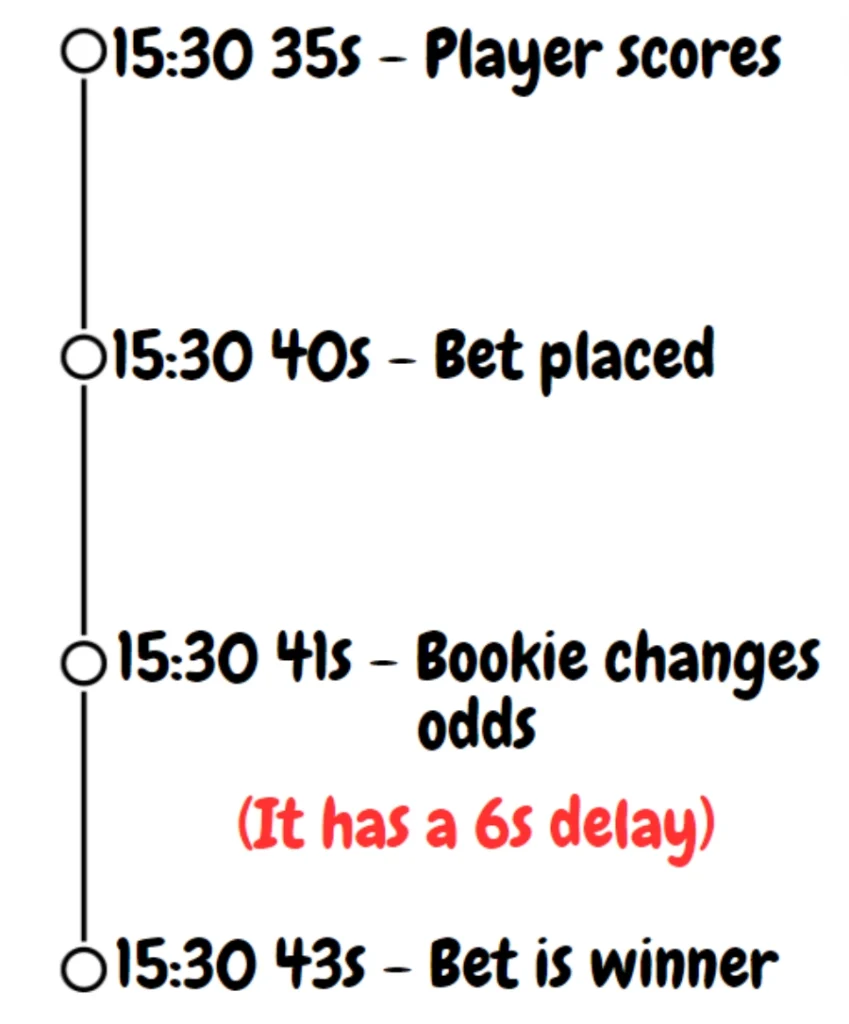
In practical terms, courtsiding means reacting to an event outcome slightly earlier than the betting market reflects it, rather than predicting results in advance. The moment a bet is successfully placed, the odds should significantly drop.
Accessing information earlier can involve on-site observation combined with communication to another person who places bets remotely.
In modern betting environments, some bettors attempt to identify timing differences using odds comparison tools, although these gaps are typically short-lived and heavily monitored.
Courtside betting is sometimes discussed alongside arbitrage betting, particularly when one bookmaker updates odds more slowly than others.
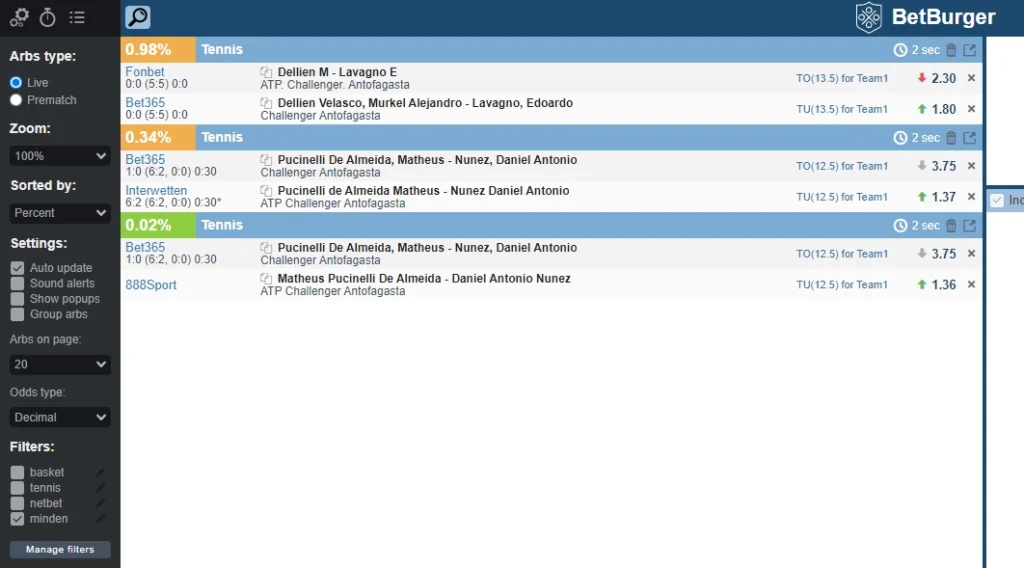
For this approach to even be possible, a bookmaker must consistently lag behind market-leading operators, which is increasingly rare.
Courtside betting is a strategy I have personally tested in the past, with mixed outcomes that included both short-term gains and rapid account restrictions.
Bookmakers receive live data through centralized feeds that may introduce small delays, but these delays are closely tracked and corrected.
Relaying event changes faster than bookmakers can temporarily influence available prices, but this advantage is unstable and short-lived.
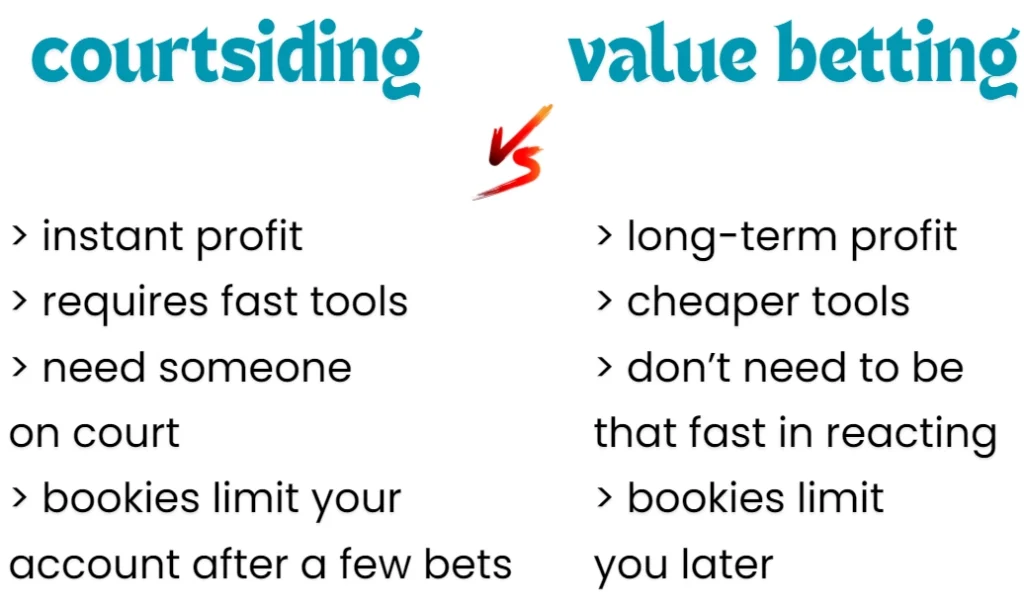
Courtside betting is sometimes combined with value betting concepts, although the two value betting strategies operate under very different risk profiles.
Many bettors focus on immediate outcomes, which often leads to rapid detection and account intervention by bookmakers.
To slow detection, some bettors attempt to blend activity patterns, although this does not eliminate enforcement risks.
Downsides
Although courtside betting still exists in limited forms, it carries substantial practical and financial drawbacks.
Many discussions overlook the opportunity cost of using betting accounts for courtside betting instead of more sustainable approaches.
While short-term gains may occur, bookmakers typically identify this activity faster than traditional betting strategies.
As a result, courtside betting often leads to faster stake limits, voided bets, or full account closures.
Based on my experience, most betting sites intervene after only a small number of such bets.
Even when a bet is accepted, there is a meaningful risk of it being voided before settlement.
Compared to this, value betting approaches often allow longer account lifespans, even if short-term variance is higher.
What is a working courtsiding method for tennis?
Specific operational details of courtside betting methods cannot be shared in full, but the general structure can be described.
Using phones or visible devices at sporting events can attract attention and result in removal from venues.
For this reason, some bettors historically relied on indirect signaling methods, which are now widely monitored.
These setups typically involved one person observing the match and another preparing a wager in advance.
The execution depended on precise timing and pre-positioned betting slips.
Is there a courtside betting software?
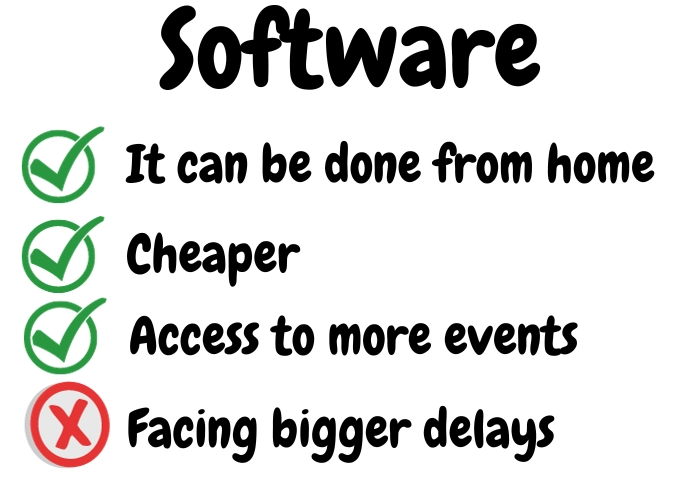
Some bettors historically used in-play odds scanners to identify delayed price updates.
Using such tools requires comparing slower bookmakers against faster reference operators.
Courtsiding through software is now far less accessible due to faster data synchronization across bookmakers.
The role of BetBurger in this strategy
- Identifying repeated price delays can indicate slower updating behavior.
- Such delays may last only a few seconds.
- Relying solely on software is insufficient, as bookmakers actively correct these discrepancies.
- Even when a delay is observed, repeated usage leads to detection.
Courtside betting on football and tennis also comes with strict practical limitations.
Sustained profitability is unlikely when bets consistently resolve immediately after placement.
Rapid, repeated wins are a strong signal for bookmaker monitoring systems.
Placing only occasional bets and mixing activity may delay intervention but does not prevent it.
High-stake or repeated instant wins significantly increase enforcement risk.
Is courtsiding allowed/legal?
Courtside betting is not explicitly illegal in many jurisdictions, but legality depends on local regulations and event policies.
In Australia, enforcement actions in 2013 highlighted regulatory concerns around information misuse.
That case involved allegations of using restricted information channels, although charges were later dropped.
Even where not illegal, courtside betting is often prohibited by event organizers and betting operators.
Regulations differ by country and by sporting authority.
Event organizers actively monitor spectators for suspicious behavior.
Sanctions typically involve venue bans rather than criminal penalties.
Want to learn about other betting methods? Check my arbitrage betting beginner guide and value betting step by step guide.
Consequences and enforcement
Individuals identified engaging in courtside betting are usually banned from events.
Modern tournaments may use electronic monitoring tools to detect suspicious activity.
In 2016, multiple spectators were banned from tennis tournaments for extended periods.
Repeat violations can lead to more serious consequences.
Bookmakers also monitor betting patterns, including instant price movements after bet placement.
Accounts flagged for this behavior commonly face voided bets and stake restrictions.
Is courtsiding still possible?
Courtside betting is technically possible in rare circumstances but is increasingly impractical.
Most bettors attempting it face rapid enforcement.
Even experienced bettors report short account lifespans.
Alternative strategies relying on analytical rather than timing advantages tend to be more sustainable.
Costs and feasibility
Travel and ticket costs significantly reduce any potential edge.
Access to premium events can be expensive.
Only a limited number of matches present timing discrepancies.
As a result, courtside betting is not scalable for most individuals.
Is it worth attempting?
In my assessment, courtside betting is viable only for a very small subset of participants.
The primary downside is rapid account closure.
Modern bookmaker systems are highly effective at detection.
Other data-driven betting strategies typically offer lower enforcement risk.
Educational resources on arbitrage betting and value betting provide safer alternatives for understanding market mechanics.
While those strategies also carry risks, they generally allow longer-term participation than courtside betting.
