
14 Football betting strategies & systems I Tested
Are you looking for football betting strategies and commonly discussed betting systems? I have tested many approaches over time, and below you will find an overview of those that are generally considered more structured and method-driven.
The football betting strategies discussed in this article have been tested over extended periods, and some were part of my overall betting activity for several years. However, long-term success depends on having a measurable edge, which is difficult to maintain consistently.
Such an edge may appear when bookmakers publish odds, betting lines, or promotional offers that differ from broader market consensus.
In this guide, you will learn:
- About football betting strategies that aim to identify potentially overpriced odds and how bettors attempt to approach them
- How some strategies rely on statistics and historical data rather than predictions
- Why certain football betting approaches are discussed as long-term frameworks rather than short-term solutions
Edited on December 18th, 2025: additional notes on value betting were added.
⚠️ Important Legal & Risk Disclosure
Sports betting laws, regulations, and permitted practices vary significantly by country, state, and jurisdiction. The information on this page is provided for educational and informational purposes only and does not constitute financial, legal, or gambling advice.
Sports betting always involves financial risk, including the possibility of losing part or all of the money wagered. No betting strategy, software, or method can guarantee profits or consistent outcomes.
Some strategies discussed may be restricted, limited, or discouraged by certain bookmakers, and availability depends on local laws, bookmaker terms, and individual account status.
Readers are responsible for ensuring that any betting activity they engage in is legal in their location and complies with the terms of the betting platforms they use.
Which football betting strategies are considered the most profitable?
The football betting strategies most often associated with profitability are those that attempt to identify pricing inefficiencies, such as odds or lines that differ meaningfully across bookmakers.
Lower-variance strategies commonly referenced include matched betting and arbitrage betting. Strategies such as value betting are often cited as potentially more profitable over time, but they also involve higher volatility and longer losing periods.
#1. Using bonus offers in a structured way
Matched betting, also known as bonus hunting, is often viewed as one of the more accessible betting strategies for beginners.
This refers to beginners in sports betting in general, as well as those new to football betting specifically.
Many football mathematical betting approaches can theoretically generate meaningful returns over time, but they require experience, discipline, and accurate execution.
Not every bettor has the background or patience needed to apply these systems consistently.
Matched betting focuses on using bookmaker promotional offers in a controlled manner.
With careful planning, bettors attempt to complete wagering requirements while limiting downside exposure.
It is often described as one of the simplest structured approaches for minimizing short-term variance, though losses can still occur due to execution errors or misunderstood terms.
Why matched betting is often recommended for beginners
- It does not require advanced knowledge of football
- It can be started with relatively modest capital
- There are affordable tools designed specifically for this strategy
- It introduces core concepts used in more advanced betting methods
- Results are influenced by time invested, but outcomes are not guaranteed
How this strategy is typically approached
- Identify licensed bookmakers in your region that offer bonuses
- Select offers with realistic wagering requirements (for example, lower rollover multipliers)
- Deposit amounts aligned with the bonus structure
- Use software to identify betting positions where both outcomes can be covered with limited expected loss
Odds differences between bookmakers are common, and occasionally one operator may offer a slightly higher price on the same outcome.
These differences form the basis of bonus-related strategies. In some cases even betting odds format conversion is necessary.
Matched betting has historically been popular in markets such as the UK, where competition among bookmakers leads to frequent promotions.
#2. Taking advantage of odds differences between bookmakers
I have practiced arbitrage betting for many years. It is often discussed as a lower-variance approach, but it still involves operational and account-level risks.
Arbitrage betting is commonly used by bettors who wish to reduce exposure to match outcomes, especially when bonus offers are no longer available.
This betting approach shares similarities with matched betting, but the source of profit is different.
Basics of this soccer betting system:
- Start using arbitrage betting software
- Identify odds discrepancies across bookmakers
- Place bets on opposing outcomes at different bookmakers
- Calculate stakes carefully to reduce imbalance
In matched betting, most returns come from promotional incentives, and individual bets may have very small or even slightly negative expected value.
In arbitrage betting, returns depend entirely on pricing discrepancies. While higher percentages occasionally appear, they are not consistent or guaranteed.
For example, if two outcomes are both priced at 2.10 across different bookmakers, covering each outcome evenly may result in a small theoretical return, but execution risk still exists.
#3. Value betting: focusing on pricing inefficiencies
I’ve been practicing value betting for several years. It is widely discussed as one of the more scalable betting frameworks, but it also carries the highest short-term risk.
Many experienced bettors consider value betting viable over the long run, although results vary significantly between individuals.
Value betting is often cited as harder for bookmakers to detect quickly, but it does not eliminate the risk of account limitations.
How value betting is generally approached
Estimating probability
Bookmakers estimate outcome probabilities using models and market data. Some operators, often referred to as “sharp bookmakers,” are considered more accurate.
Comparing odds from local bookmakers against sharper market benchmarks can provide directional insight, but it does not guarantee accuracy.
Manual comparison is possible, but most bettors rely on software to save time, as odds adjust quickly.
Identifying potential value consistently requires discipline and realistic expectations.
Placing bets on perceived value
Using a value bet finder software to highlight odds that appear higher than market consensus.
alculating expected value precisely can be complex and relies heavily on assumptions.
As a simplified approach, some bettors focus on opportunities where local odds exceed sharp market odds by a small margin, though this still involves risk.
Larger discrepancies may lead to faster swings in results, both positive and negative.
Managing variance
Losses are a normal part of value betting, sometimes occurring in extended streaks.
Because outcomes are not covered, losing runs are unavoidable.
Many bettors struggle psychologically during prolonged downturns.
Even when odds appear favorable, results can deviate from expectations for long periods.
#4. Football betting strategies based on historical data and statistics
Many football betting strategies rely on estimating probabilities and identifying odds that appear mispriced.
Most of the previously mentioned strategies depend on odds-scanning software.
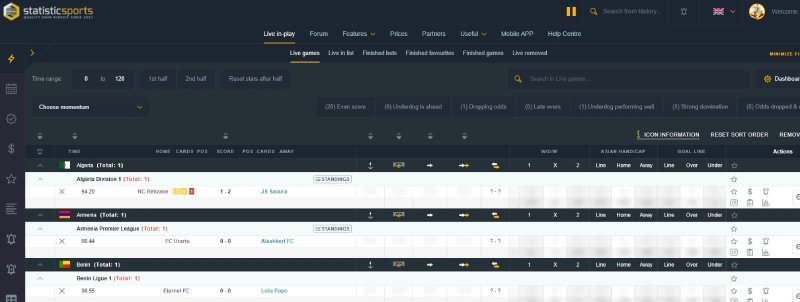
One drawback of popular approaches is that widespread use can draw bookmaker attention, increasing the likelihood of stake limits.
All betting strategies discussed above can lead to account restrictions if applied aggressively.
Using statistical databases can offer a different perspective by focusing on historical trends rather than immediate odds discrepancies.
With sufficient experience, some bettors use data models to identify situations where market pricing may lag behind statistical indicators.
Several platforms provide historical datasets and betting simulation tools covering tens of thousands of matches.
When combined with live-betting experience, statistics may help identify opportunities, though results are not guaranteed.
I am aware of bettors who have reported success using in-play statistics against large bookmakers, but outcomes vary widely.
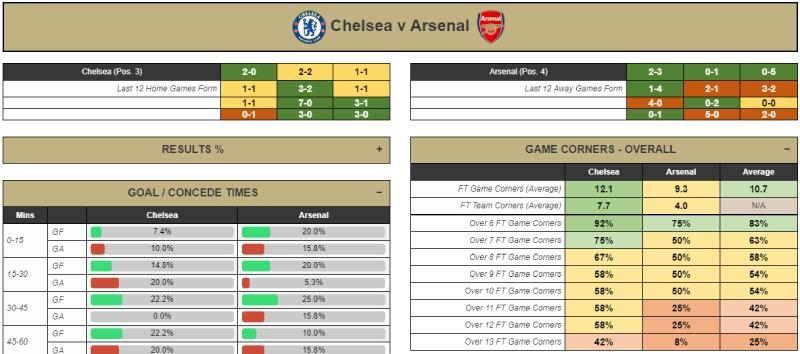
Tools such as StatisticSports and PlayThePercentage offer historical datasets and model-based indicators.
These platforms allow backtesting strategies across multiple seasons, helping bettors understand potential strengths and weaknesses without risking real funds.
Backtesting does not ensure future success, but it can help assess whether a football betting system is structurally viable before real-world use.
#5. Follow professional football bettors
Many people do not have the time required to properly learn and apply the strategies described above, and based on experience, most of them require extended time spent researching, monitoring odds, and managing bets.
Both arbitrage betting and value betting can be very time-intensive. It is not unusual for serious bettors to spend many hours per day monitoring markets, especially when trying to apply these methods consistently.
If you do not have the time or capacity to apply these strategies yourself, following bettors who publish selections based on similar methods may appear to be an alternative.
Some experienced bettors offer tipster services on platforms such as Tipstrr. However, it is important to understand that following a tipster does not provide guaranteed results, and outcomes can vary significantly over time.
Unlike matched betting or arbitrage betting, tipster-based strategies expose you fully to variance and losing streaks.
That said, selecting a tipster who applies a clearly defined and transparent strategy may help reduce research time, although it does not remove financial risk.
I have followed several tipsters over time, and some base their selections on value-betting principles rather than predictions or intuition.
Many of these tipsters validate their picks by comparing odds against sharp bookmakers such as Pinnacle. While this approach can be statistically sound, it still does not guarantee profitability and requires patience.
#6. Using a staking system for football betting strategies
Many bettors underestimate the importance of a staking system when applying any football betting strategy.
Based on experience, even a well-designed betting strategy can fail if stakes are managed poorly.
Using a simple flat-staking approach is generally safer than betting without any structure.
More advanced systems, such as the Kelly Criterion, aim to adjust stake size based on bankroll and perceived edge, but they rely heavily on accurate probability estimates.
Here is are two short videos on how the staking simulators developed by BetMetricsLab work:
YYou do not need overly complex systems to improve risk control. Using a consistent percentage of your bankroll per bet is often sufficient.
Some bettors choose to stake around 3.5%–5% of their available balance per bet, although this level still carries risk and may not be suitable for everyone.
When winning, stake size increases naturally; during losing streaks, exposure is reduced, which can help manage drawdowns.
While staking systems cannot eliminate losses, they can reduce the impact of extended losing periods.
#7. Courtside (courtsiding) betting
Courtside betting is based on attempting to act on information faster than bookmakers update their markets.
Historically, this approach was more common when bettors attended live sporting events, particularly tennis, and placed bets during play.
In theory, having faster information can create a temporary edge.
In practice, this strategy is extremely difficult to execute consistently and carries significant risks, including voided bets and account closures.
For example, placing a bet seconds after a goal or point occurs may result in the bet being canceled rather than settled.
Courtside betting is particularly unsuitable for football due to market suspensions, delays, and increased bookmaker safeguards.
#8. Track your bets in a spreadsheet
For many years, I did not track my betting activity in detail.
If you have extensive experience and consistently positive results, tracking may seem unnecessary.
However, keeping records—even in a simple spreadsheet—can help identify recurring mistakes, weak markets, or unprofitable odds ranges.
A practical example comes from my own basketball betting history, where long-term underperformance was not immediately obvious.
After compiling results in a spreadsheet and filtering by market type, odds range, and league, I identified areas where my strategy was ineffective.
The same approach applies to football betting.
While spreadsheets are not essential for every strategy, they are particularly useful for value betting and statistical approaches.
#9. Using reputable bookmakers with competitive odds
Many bettors underestimate the importance of bookmaker selection.
Strong marketing does not necessarily reflect trustworthiness or competitive pricing.
Using bookmakers with established reputations and transparent terms reduces operational risk.
High odds are a crucial element of any long-term betting strategy.
If a bookmaker operates with a margin of 8%–9%, only major pricing errors would allow consistent profitability, which are rare.
#10. Specializing in a specific market
When applying structured betting strategies, patterns tend to emerge over time.
In football betting, bookmakers often make more pricing errors in niche markets such as handicaps, corners, or cards.
By following the same bookmakers over extended periods, some bettors learn where pricing inconsistencies appear more frequently.
Developing expertise in a specific market requires time and disciplined observation, but it can improve decision quality.
#11. Taking breaks after significant losses
This is one of the most important pieces of practical advice.
Extended losing streaks or execution mistakes, especially in arbitrage or live betting, can lead to emotional decisions.
Taking a short break allows decision-making to reset and reduces the risk of compounding losses.
#12. Using crypto bookmakers with bonus offers
Cryptocurrency payments may seem complex at first, but many bettors find them manageable after initial setup.
Some crypto-based bookmakers offer higher bonuses and odds compared to traditional operators, though this varies widely.
For bettors who value privacy or face limited local options, these platforms may provide alternatives.
Relevant article: check the following list of great corner betting sites that allow you to deposit with crypto.
However, crypto bookmakers are often less regulated, and dispute resolution can be more difficult.
In some countries with gambling monopolies or restrictive regulations, bettors seek alternatives due to limited competition and high margins.
That said, higher bonuses do not guarantee profitability, and bonus terms can still lead to losses if misunderstood.
#13. Accepting the limits of football knowledge
Winning in football betting starts with accepting that your knowledge about players, teams, and leagues is not enough to stay profitable.
A huge part of bettors are football fans, who won’t miss a single match with their favorite teams. This type of bettor knows many info, even insider info about the players and the chance of their team winning/losing.
However, my most important tip if you want to win and generate long-term profits is that you need to accept that traders at bookies have more info and sophisticated ways to calculate the right odds.
For this reason, you need better sources and better strategies to win in betting.
#14. Focus on single bets only
Parlay bets are well known to offer a higher edge for bookies.
By avoiding accumulator bets, bettors can gain back that edge more easily, even without following a math-based strategy.
The only exception under this tip would be when someone places accumulator bets where each leg has a positive Expected Value.
How to choose the best football betting technique for your needs?
Choosing a strategy that aligns with your goals and experience requires multiple steps.
1. Determine your starting capital
Knowing the amount of money you are willing to allocate for wagering purposes on football will show you the strategy you can practice.
A small betting balance of $100 will be enough for betting strategies such as matched betting or limited-value betting.
Arbing and other football strategies require a bigger starting capital.
2. Know your risk tolerance
Strategies such as value betting or bets based on statistics require a higher risk tolerance.
Other techniques, such as arbitrage or matched betting, are more beginner-friendly and risk-free.
3. Have a goal of desired profitability
Knowing your goals with a football wagering strategy is essential to avoid any disappointments.
While value betting is the most profitable wagering system for football, matched betting can generate only a few hundred $ profit each month.
Starting with a strategy with a low profit potential can easily lead to wasting time and energy.
Beginner-friendly football betting strategies
Matched betting is often considered the most accessible starting point, even for bettors with no prior experience.
Arbitrage betting requires more operational skill but can be approached cautiously with smaller stakes.
Value betting demands the most patience and experience, and while it is often discussed as highly profitable over the long run, it also carries the highest psychological and financial risk.
Final disclaimer
No football betting strategy guarantees profits. All methods discussed involve financial risk, potential losses, and the possibility of account restrictions. These strategies should be treated as educational frameworks rather than income promises.
