
Can You Get Rich From Sports Betting? Methods I Tested and Lessons Learned
Achieving substantial financial success through sports betting is difficult due to many interacting factors, including variance, market efficiency, and operational constraints.
Developing structured strategies and gaining deep experience in a specific sport are necessary foundations, but they do not guarantee long-term financial success.
Below are approaches that some bettors explore to improve decision quality, rather than promises of outperforming bookmakers consistently.
⚠️ Important Legal & Risk Disclosure
Sports betting laws, regulations, and permitted practices vary significantly by country, state, and jurisdiction. The information on this page is provided for educational and informational purposes only and does not constitute financial, legal, or gambling advice.
Sports betting always involves financial risk, including the possibility of losing part or all of the money wagered. No betting strategy, software, or method can guarantee profits or consistent outcomes.
Some strategies discussed may be restricted, limited, or discouraged by certain bookmakers, and availability depends on local laws, bookmaker terms, and individual account status.
Readers are responsible for ensuring that any betting activity they engage in is legal in their location and complies with the terms of the betting platforms they use.
Is it realistic to become wealthy through sports betting?
Attempting to generate large, sustained returns from sports betting requires treating the activity with the discipline of a full-time analytical pursuit, not a casual hobby.
Learning betting strategies and applying probability-based systems are only initial steps in a much longer learning process.
Transforming sports betting into a full-time occupation, let alone building significant wealth, typically requires years of experience, financial resilience, and realistic expectations.
1. Learning the fundamentals of odds and market movement
For beginners, understanding how betting odds are formed and adjusted is a critical part of developing analytical skills.
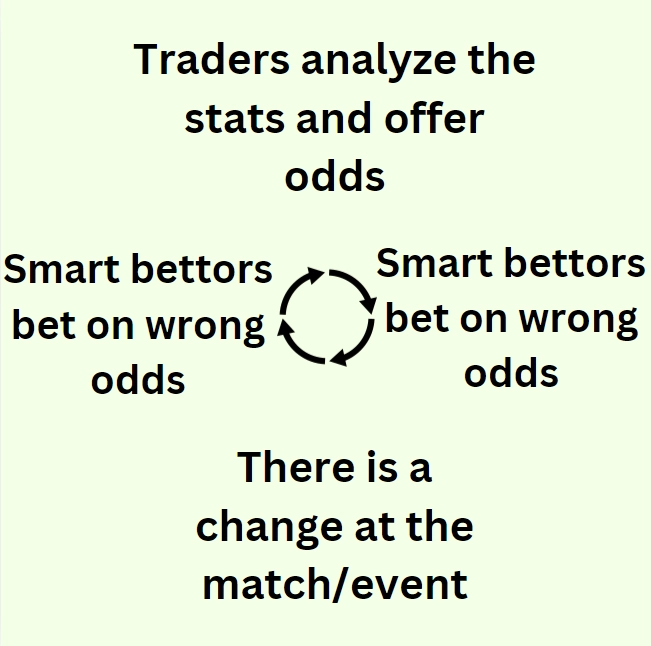
Understanding how bookmakers model probability, recognizing how odds shift, and knowing sport-specific rules are essential competencies, not shortcuts to profit.
Mistakes made early in a betting journey can be costly, especially when stake sizing and probability assessment are misunderstood.
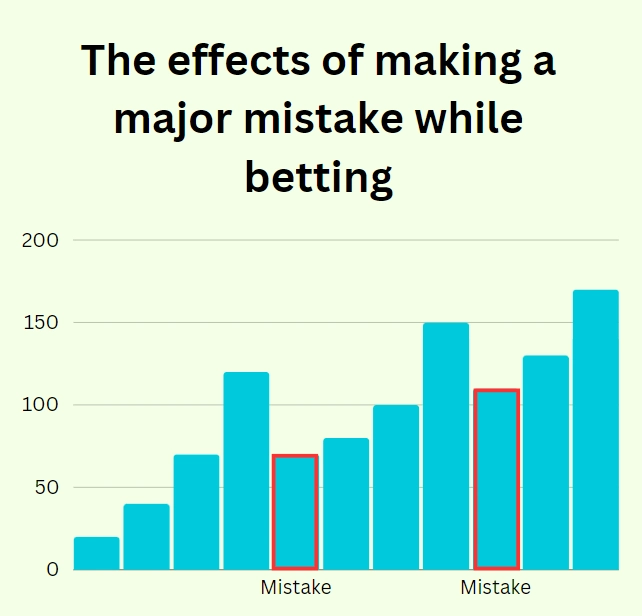
Early in my experience, I underestimated how complex certain markets, such as Asian handicaps, can be without proper study.
Placing wagers on markets that are not fully understood can increase the likelihood of sustained losses.
These issues can often be reduced by spending more time researching markets and reviewing historical outcomes.
Reviewing betting history and performance metrics is one of the most practical ways to identify weaknesses and improve discipline over time.
Analytical tools such as staking simulators and historical performance trackers for betting can help bettors evaluate risk without additional financial exposure.
2. Gaining experience with arbitrage betting
Arbitrage betting is often discussed as a learning-oriented strategy because it focuses on execution rather than prediction.
This approach attempts to take advantage of temporary odds discrepancies, which may occur due to timing differences across sportsbooks.
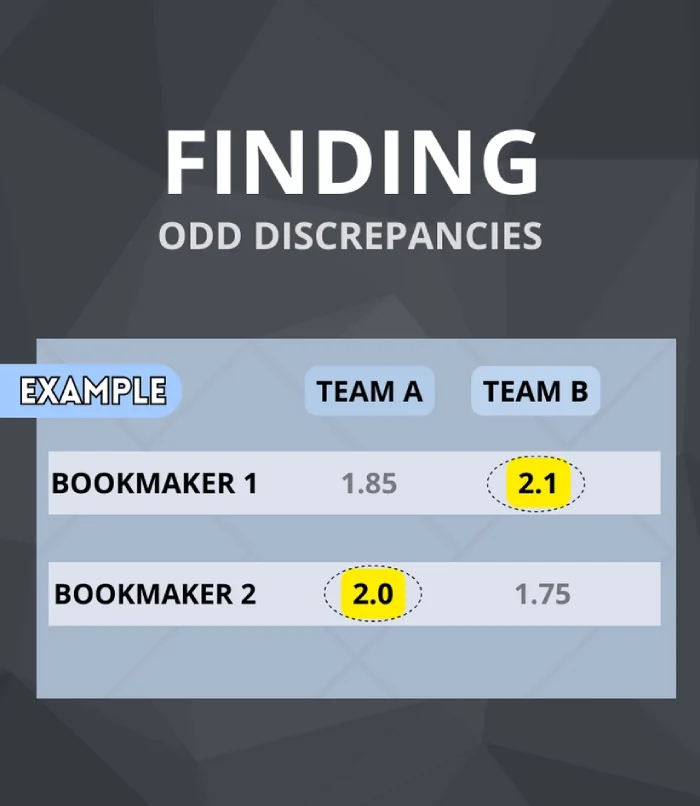
Pricing inconsistencies between bookmakers can occasionally allow for balanced exposure, though such opportunities are increasingly rare.
Arbitrage betting is sometimes used by beginners to understand odds mechanics and stake calculation, rather than as a long-term income solution.
In the broader context of betting education, arbitrage may help some bettors build initial familiarity with market behavior, but scalability is limited.

However, arbitrage betting has significant operational drawbacks, including account restrictions and execution risk.
Understanding stake sizing, market liquidity, and timing is important to reduce unnecessary account limitations.
Further explanation of these mechanics is available in my introductory arbitrage betting guides.
3. Using bookmaker promotions through matched betting
No-risk matched betting, or by another name, bonus hunting, is often used early in a bettor’s learning phase.
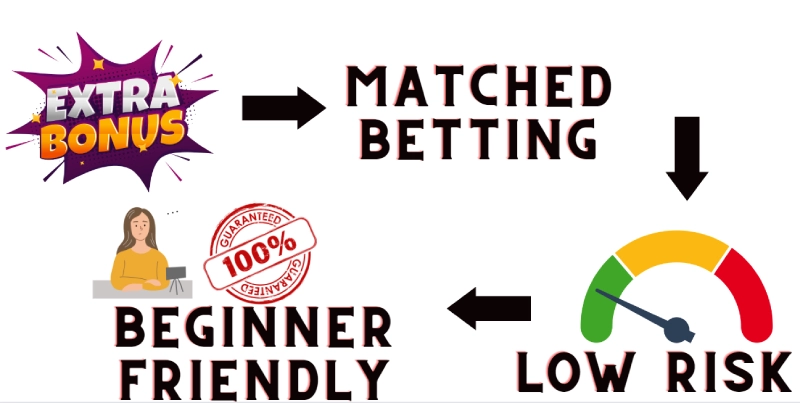
This method relies on sportsbook promotional offers, which include specific wagering requirements and limitations.
By structuring bets carefully, bettors attempt to reduce exposure while meeting bonus conditions, though mistakes can still result in losses.
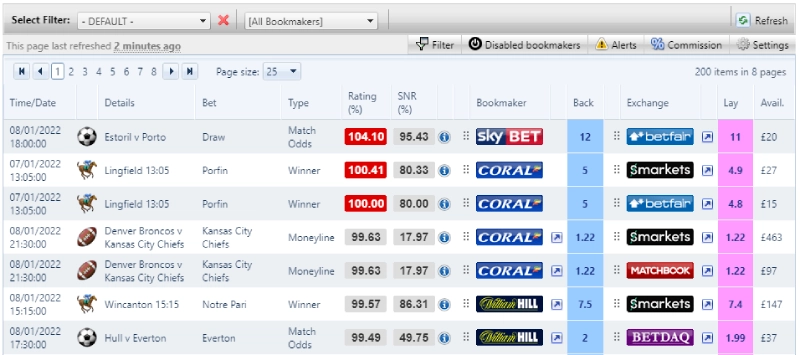
In the long run, bookmaker bonuses tend to have limited relevance, as offers expire and account restrictions increase.
Matched betting can help some users increase familiarity with betting mechanics, but it rarely serves as a primary long-term strategy.
While it may produce modest short-term results for some bettors, matched betting is best viewed as an educational and transitional approach, not a path to substantial wealth.
4. Shifting focus toward value betting
One advanced concept many bettors study is value betting, which involves comparing offered odds with estimated probabilities.
This approach generally carries higher variance than arbitrage or matched betting and requires stronger analytical discipline.
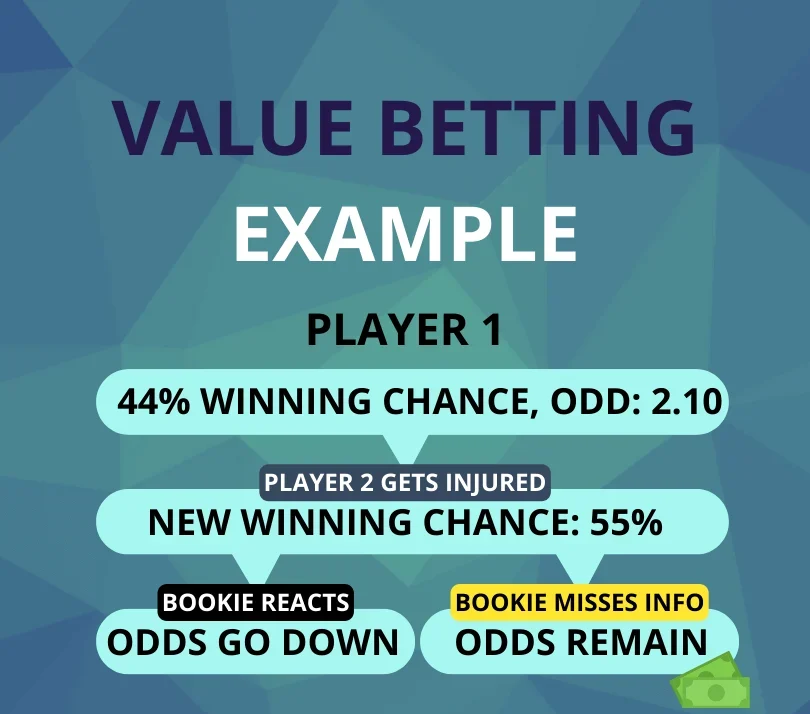
Value betting does not produce consistent short-term results, but over large samples, outcomes may align more closely with statistical expectations.
Claims of large percentage advantages should always be treated cautiously, as results depend on execution, accuracy, and market behavior.
Value betting can require less frequent wagering, but it places greater emphasis on probability modeling and emotional control.
Managing variance through appropriate stake sizing is essential, as losing streaks are unavoidable.

A similar betting simulator for value betting is developed by BetMetricsLab with many inputs that help you understand better the effect of each change you make in your strategy.
Long-term performance depends on consistent methodology, not individual results.
No betting approach eliminates losses, but disciplined processes can help bettors evaluate decisions more objectively.
5. Specializing in a limited number of sports
Focusing on one or two sports can help bettors better understand market dynamics, rather than relying solely on automated tools.
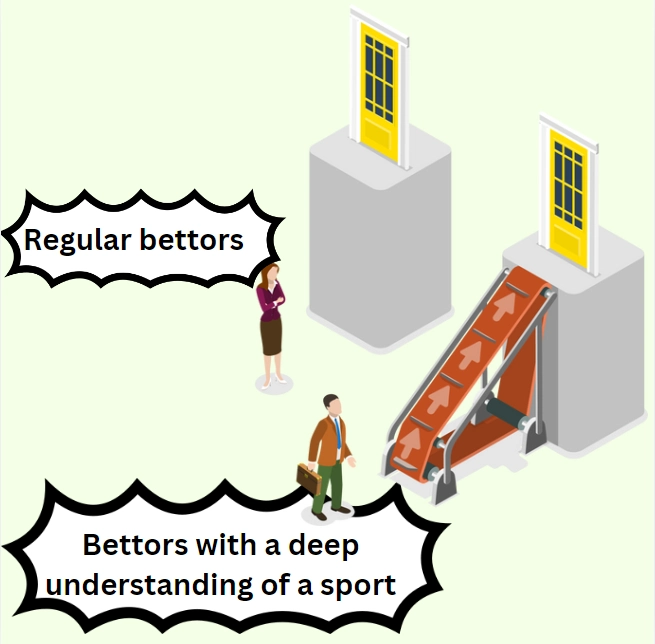
Deeper familiarity with a sport may help bettors interpret odds movement and contextual factors, though this does not guarantee success.
Observing live events can improve understanding of how markets respond, but reaction speed and bookmaker safeguards limit advantages.
Specialization can reduce analytical errors, but it does not remove the inherent uncertainty of betting outcomes.
6. Managing access to betting accounts responsibly
Sportsbooks monitor betting behavior and may apply limits when patterns suggest systematic exploitation.
Using multiple regulated sportsbooks can help bettors compare odds, but this also increases administrative complexity.
Reducing stake sizes and spreading activity can sometimes extend account usability, though restrictions remain a normal part of betting environments.
From an analytical perspective, sportsbook access is a practical constraint, not an asset that guarantees profit.
Maintaining compliance with bookmaker rules is essential for long-term participation.
7. Understanding risk as bankroll size increases
Increasing stakes proportionally increases both potential returns and potential losses.
When using percentage-based staking, the mathematical risk remains constant, but emotional pressure often increases with higher nominal amounts.
Growing a bankroll does not eliminate variance, and discipline becomes more important as stake size rises.
Some bettors reduce risk exposure as balances grow, trading potential returns for stability.
Neither approach guarantees success; both involve trade-offs.
What does it take to pursue betting as a full-time activity?
Attempting to rely on betting income requires:
- Continuous learning and testing
- Significant time commitment
- Emotional resilience during downturns
- Treating betting as structured analysis, not entertainment
Market conditions change frequently, and strategies can lose effectiveness as they become widely used.
Time availability matters, but more hours do not automatically result in better outcomes.
Long-term consistency requires risk control, not constant activity.
Strategies that are unlikely to build long-term wealth
Some betting systems are widely promoted despite having poor mathematical foundations.
Martingale staking system:
Back in 2013, when I started researching profitable techniques to beat bookies, the martingale was one of the most often recommended ones.
The Martingale system involves increasing stake size after losses in an attempt to recover previous bets.
While often recommended to beginners, this approach exposes bettors to extreme risk.
Losing streaks are a normal part of sports betting, and doubling stakes rapidly leads to unsustainable exposure.
After a small number of losses, required stake sizes can exceed practical bankroll limits.
No outcome is guaranteed, and poor staking systems often lead to total bankroll depletion.
Final perspective
Sports betting does not offer a reliable path to wealth for most participants.
Some bettors improve decision quality through probability-based approaches, but long-term success depends more on risk management and expectations than strategies alone.
Approaching betting as education rather than a promise of riches leads to healthier and more realistic outcomes.
