
Can You Bet on Both Teams and Win? Methods Explained With Risks
I’ve been betting since 2013, and a significant part of my activity involved strategies that focused on reducing outcome exposure by covering multiple sides of a market, rather than predicting winners.
The basic idea behind covering every possible outcome and still attempting to generate a return is that pricing differences must exist between bookmakers, and these differences are often small and short-lived.
The size of any odds discrepancy determines whether a strategy is even viable, and in many cases whether the effort outweighs the risks involved.
⚠️ Important Legal & Risk Disclosure
Sports betting laws, regulations, and permitted practices vary significantly by country, state, and jurisdiction. The information on this page is provided for educational and informational purposes only and does not constitute financial, legal, or gambling advice.
Sports betting always involves financial risk, including the possibility of losing part or all of the money wagered. No betting strategy, software, or method can guarantee profits or consistent outcomes.
Some strategies discussed may be restricted, limited, or discouraged by certain bookmakers, and availability depends on local laws, bookmaker terms, and individual account status.
Readers are responsible for ensuring that any betting activity they engage in is legal in their location and complies with the terms of the betting platforms they use.
Can I bet on each outcome of a sports market?
Betting on both teams in a sports market can reduce outcome risk, but it does not guarantee profit, especially once execution errors, limits, and voided bets are considered.
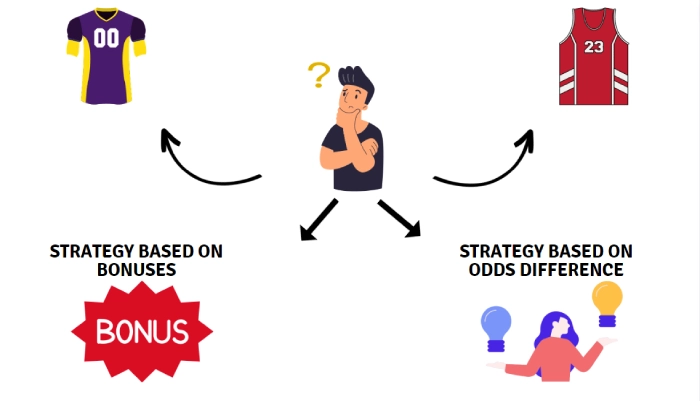
There are two commonly discussed strategies that attempt to structure bets across outcomes: arbitrage betting and matched betting.
Many bettors, myself included, have used these approaches to reduce reliance on match results, although this does not remove operational or account-level risks.
Strategies to place a bet on both teams
1. Finding sure bets (arbitrage betting)
Betting on both teams without regard to odds will always result in a guaranteed loss due to bookmaker margins.
To even attempt a positive outcome, you must find odds discrepancies between different bookmakers.
For example, at one bookmaker a tennis player may be priced at 2.00, while another bookmaker offers 2.10 on the opposing player.
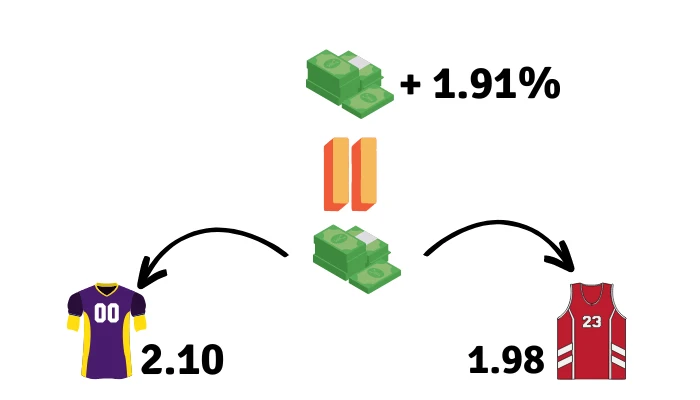
These discrepancies appear regularly across markets, but most are too small to be usable after accounting for fees and execution risk.
Bookmakers receive different information at different times or update markets at different speeds, which occasionally creates short pricing gaps.
Pros (with important limitations)
- YYou can structure bets across different bookmakers to reduce exposure
- Tools exist that scan markets for potential discrepancies
- Outcome variance is reduced when execution is correct
Cons (often underestimated)
- You must act quickly before odds change or markets suspend
- Access to multiple bookmakers is required
- Bets may be voided, limited, or partially accepted
You might place €100 at odds of 2.00 with one bookmaker and €95 at odds of 2.10 with another.
In an ideal scenario, this could result in approximately €4.50 profit, assuming both bets are accepted in full and no conditions change.
This mathematical structure is known as arbitrage betting, sometimes called sure betting.
Important downside:
This outcome assumes no odds movement, no stake rejection, no voided bets, and no account restriction, conditions that rarely persist consistently.
Make sure to check the following article on realistic profit constraints in arbitrage betting.
2. Exploiting bonus offers (matched betting)
Matched betting was and remains one of the simplest strategies to learn for reducing exposure when using bookmaker bonuses, though it is not risk-free.
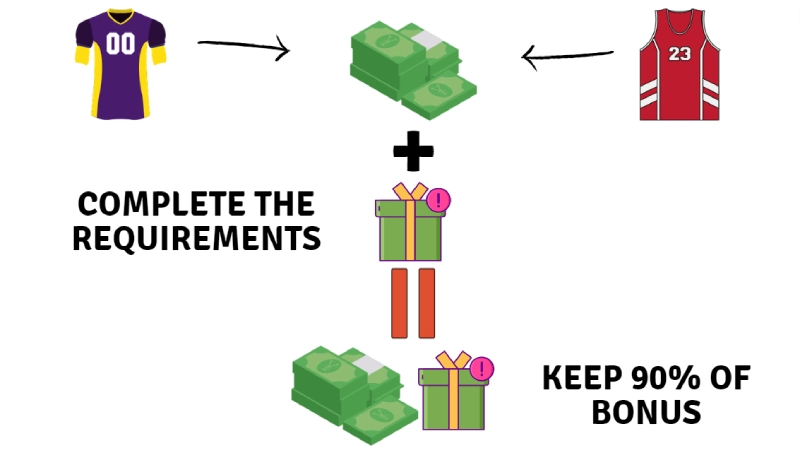
This approach depends on two critical elements:
- Finding relatively efficient odds
- Access to bonus offers with specific wagering requirements
Pros
- Bonus wagering requirements can sometimes be completed with reduced downside
- Large starting capital is not always required
- Bets are usually placed across different platforms
Cons
- Requires access to many bookmakers (often 10+)
- Errors in stake sizing or terms can result in losses
Matched betting focuses on using promotional offers while attempting to limit downside when covering outcomes and meeting rollover conditions.
Several odds-matching tools, such as OddsMonkey, provide educational resources for beginners.
What happens if you bet on both teams?
Betting on both teams ensures that one side of the bet will win, but this does not automatically mean the overall position is profitable.
Across multiple bookmakers, odds differences appear frequently, but most are not large enough to overcome bookmaker margins.
Placing a bet at a higher price than available elsewhere can improve expected value.
If the opposing outcome is covered at another bookmaker, the structure resembles arbitrage betting.
Matched betting allows a similar structure even when odds are not mispriced, by using bonuses.
Many bettors, myself included, have generated profits using these approaches, but results vary significantly.
Critical warning:
Betting on both outcomes must be done at different platforms.
Doing this at the same bookmaker often results in stake limits or account closure.
Betting exchanges (such as Betfair) or sharp bookmakers (like Pinnacle or certain Asian operators) are typically the only environments where opposing positions are openly supported.
How to properly cover each outcome of a betting market
Before outlining practical steps, it is important to understand that most bookmakers actively discourage these strategies.
They are designed to protect bookmaker margins, and consistently betting on mispriced odds reduces their profitability.
While covering both sides can reduce exposure, it does not remove risk, and mistakes can be costly.
Anyone considering arbitrage or matched betting should understand the downsides, limitations, and likelihood of account restrictions before starting.
Important steps (educational overview)
- Open accounts with more than one licensed bookmaker
- Identify markets with sufficient odds discrepancies
- Calculate stakes carefully using an arbitrage calculator
- Open markets on all platforms before placing bets
- Place bets as close together in time as possible
- Review results and errors carefully
Note: “Enjoy the profits” is not guaranteed and should be replaced with “review outcomes and assess risks.”
Advantages of covering each outcome (with context)
From my experience, potential advantages include:
- Reduced outcome variance (not eliminated risk)
- More predictable short-term results compared to prediction-based betting
- Greater control over stake sizing
- Returns are linked to time and effort invested
- Automation tools for arbing can reduce manual workload
- Lower emotional stress when executed correctly
- Can function as a supplementary income activity
- Ongoing bookmaker competition creates new opportunities
Downsides that must be considered
Betting on both outcomes also comes with significant downsides:
- Profits depend on identifying sufficiently mispriced markets
- Bookmakers actively monitor and restrict these activities
- Stake limits are common over time
- Bonus offers are reduced or removed
- Enhanced verification checks may occur
- Execution mistakes can lead to full losses
- Odds move quickly, increasing error risk
- Rapid balance growth can trigger early account reviews
Can you generate profits from betting on both teams?
Arbitrage and matched betting can be profitable for limited periods, and some beginners report €400–€500 in their first month.
However, results depend on capital, time commitment, execution quality, and bookmaker availability.
These strategies should be treated as temporary or supplementary, not primary income sources.
Most accounts are limited within 6–7 months, making long-term reliance unrealistic.
Are you allowed to bet on both teams?
Most traditional bookmakers do not support betting on both outcomes of the same market.
If detected, this behavior often leads to stake limitations or account flags.
Betting on both sides is generally supported only at betting exchanges, brokers, or sharp bookmakers.
Retail sportsbooks such as Bet365 or DraftKings typically restrict accounts that consistently cover both outcomes.
While betting across multiple sites is harder to detect, it is not explicitly permitted, and limitations remain a risk.
Some strategies persist only because operators do not fully share customer data, not because the activity is approved.
Final disclaimer
Covering both outcomes can reduce match-result risk, but it does not remove financial, operational, or regulatory risk.
These strategies require discipline, conservative expectations, and acceptance of eventual account restrictions.
