
7 Mathematical Betting Strategies I Have Studied and Applied in Football
If you are looking for betting strategies that rely on mathematical concepts rather than intuition alone, this article provides an overview of approaches that are commonly discussed within professional betting circles.
Over the years, I have tested many betting methods and focused primarily on those that use mathematics as a foundation rather than subjective predictions.

Strategies based on mathematics can offer a structured framework for decision-making, but understanding how they work, and where their limitations lie, is essential before applying them with real money.
⚠️ Important Legal & Risk Disclosure
Sports betting laws, regulations, and permitted practices vary significantly by country, state, and jurisdiction. The information on this page is provided for educational and informational purposes only and does not constitute financial, legal, or gambling advice.
Sports betting always involves financial risk, including the possibility of losing part or all of the money wagered. No betting strategy, software, or method can guarantee profits or consistent outcomes.
Some strategies discussed may be restricted, limited, or discouraged by certain bookmakers, and availability depends on local laws, bookmaker terms, and individual account status.
Readers are responsible for ensuring that any betting activity they engage in is legal in their location and complies with the terms of the betting platforms they use.
1. Exploit odds discrepancies with sure betting
Arbitrage betting, often referred to as sure betting, is generally considered one of the lower-variance mathematical betting approaches.
This method is based on identifying pricing differences between betting sites that cover the same market.
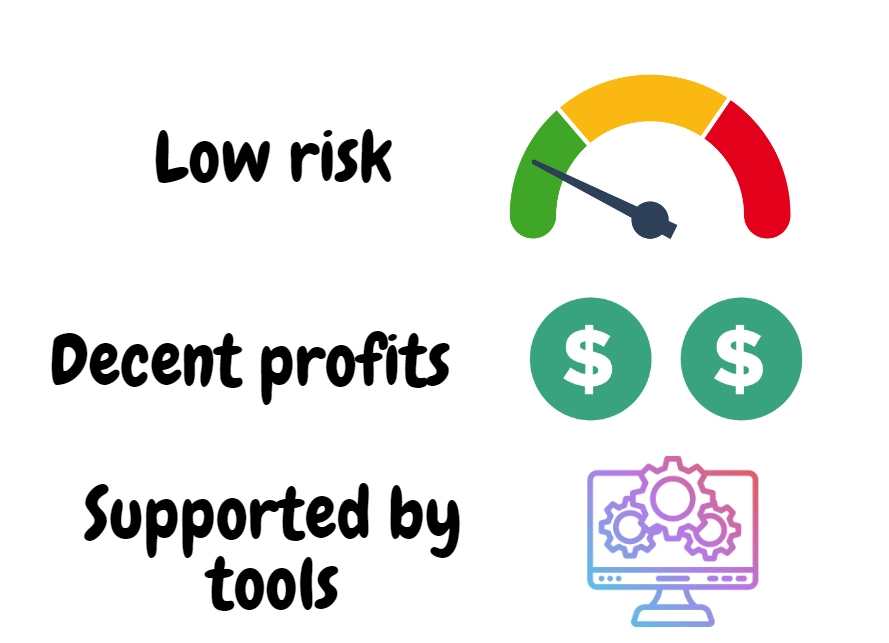
Arbitrage bettors attempt to cover all outcomes of a market in order to reduce result-based risk, although operational risk still exists.
It is considered math-based because bettors must calculate stakes for arbs precisely and ensure the odds discrepancy is large enough to offset bookmaker margins and execution risk.
When executed correctly, covering mispriced odds across different bookmakers can lead to a small predefined return, but this outcome is not guaranteed in every situation.
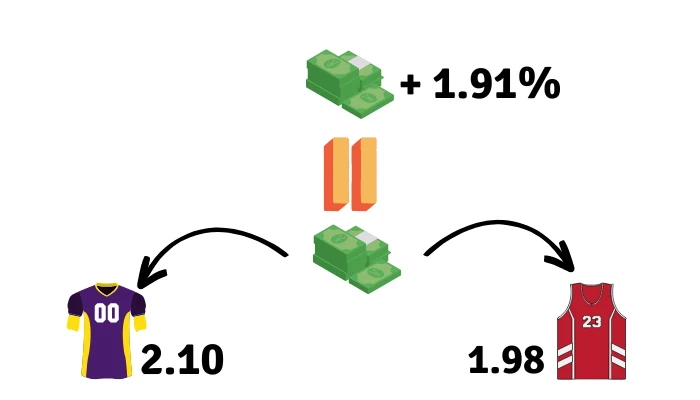
The fundamental requirement for this approach is the presence of incorrectly priced odds across bookmakers.
In practice, this strategy is operationally demanding because odds can change or be suspended within seconds.
Because of this, many bettors rely on arbitrage-scanning tools to identify potential opportunities quickly.
These tools monitor multiple bookmakers simultaneously and highlight markets where pricing differences may exist, although they do not eliminate execution risk.
My following article on how to find arbitrage bets can also be a great start if you need further info on how to spot these betting opportunities.
An advanced method, and a sister strategy of arbing is called middle betting. This approach requires an arb where the betting market line is shifted between the outcomes, so both legs can be winners.
To read more about this methodology, check the following middle betting calculator.
2. Use bonus offers with matched betting
Matched betting is another math-based approach that focuses on bookmaker bonus offers rather than match prediction.
The mathematical component involves finding betting positions that closely resemble arbitrage structures.
In practice, this means identifying markets where both outcomes can be covered at different bookmakers with minimal expected loss.
After locating such opportunities, bettors calculate stakes using simple formulas or free calculators designed for bonus wagering.
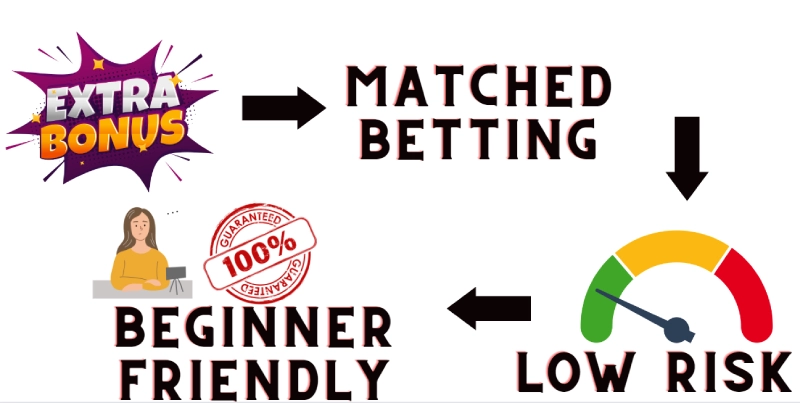
Matched bettors aim to convert promotional offers into withdrawable funds, but this depends heavily on correctly following bonus terms.
This strategy is conceptually similar to arbitrage betting, although it often involves accepting a small controlled cost rather than a pure price discrepancy.
With carefully selected odds, bettors may complete wagering requirements while limiting downside.
Matched betting is often considered time-efficient, but it still requires accuracy and attention to detail.
While odds discrepancies appear frequently, mistakes in stake sizing or misunderstanding bonus rules can result in losses.
Many matched betting service is focused on European users and decimal odds. In this case, a betting odds converter tool can come handy.
3. Apply value betting as a long-term strategy
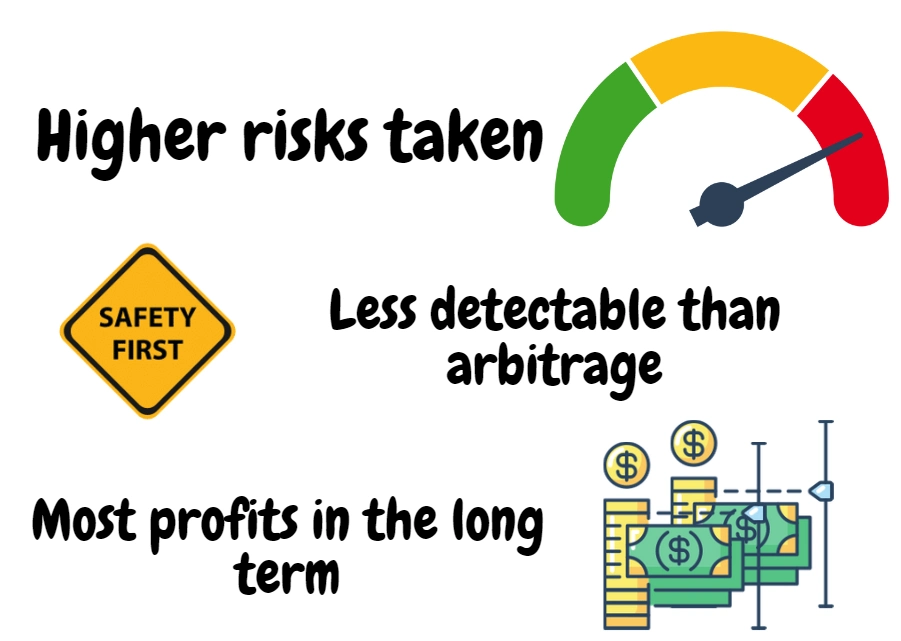
Value betting is widely regarded as one of the most profitable mathematical betting concepts over the long run, but it also carries the highest short-term risk among the strategies discussed here.
This approach focuses on identifying bets with a positive expected value (EV).
Unlike arbitrage or matched betting, value betting does not involve covering all outcomes.
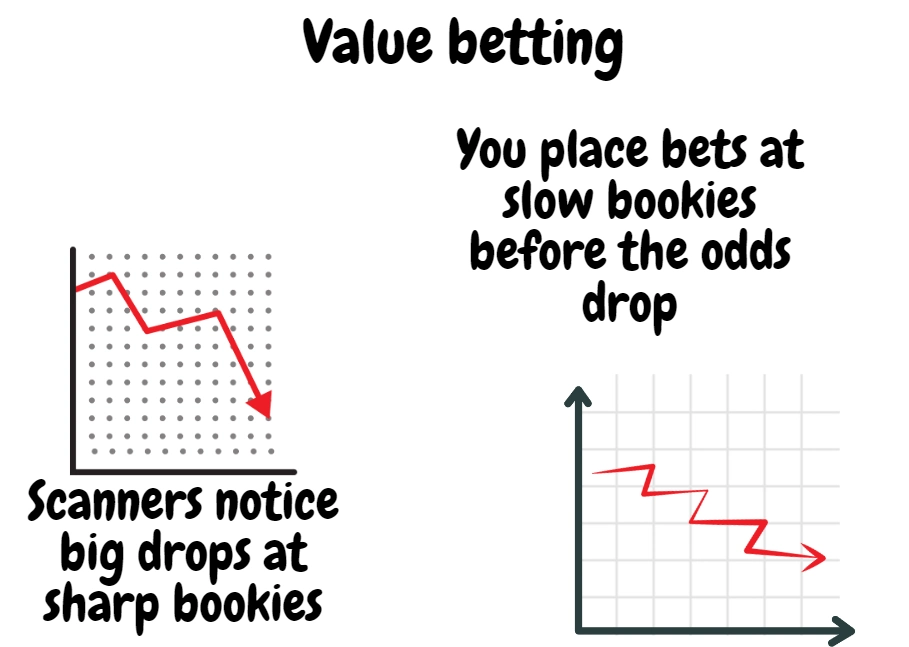
The principle is similar to arbitrage in that bettors search for odds that appear mispriced relative to true probability.
The mathematical advantage comes from consistently placing bets where the odds exceed the implied probability plus the bookmaker’s margin.
To achieve profitability, bettors must tolerate variance, including extended losing streaks.
If you want a broader comparison of tools used for identifying value bets, I discuss this further in my value-bet-finder overview.
4. Learn trading and scalping at Betfair
Sports trading and scalping on betting exchanges such as Betfair are also based on mathematical principles.
These approaches focus on price movement rather than final outcomes.
Many bettors follow trading strategies because exchanges do not limit accounts in the same way traditional bookmakers do.
However, these strategies require a strong understanding of market behavior and the factors that cause odds to move.
Mistimed entries or exits can still result in losses, especially in fast-moving live markets.
5. Use a database of sports statistics
Historical sports data and statistics can serve as a foundation for mathematically driven betting strategies.
I have tested football statistics tools that aim to identify long-term patterns rather than predict single match outcomes.
To gain an edge, bettors must combine statistical insight with realistic staking strategies.
Some platforms offer in-play data, historical simulations, and strategy-testing features.
Testing ideas on historical data without risking real money can help identify weaknesses before real funds are involved.
These simulations are typically based on tens of thousands of past matches and historical odds but they also have a huge margin of error as you can see from a simple betting simulator for value betting.
6. Avoid the martingale staking system
The martingale staking system is one of the oldest betting systems based on a mathematical progression.
It involves increasing stakes after each losing bet in an attempt to recover losses.
The required stake grows exponentially as losing streaks extend.
Based on experience, this approach is generally unsuitable for football betting.
The main weakness is the requirement to double stakes repeatedly, which quickly becomes impractical.
Extended losing streaks of 12–14 bets are statistically possible and do occur.
From a purely mathematical perspective, martingale could only survive with extremely small base stakes—often below 0.2% of bankroll.
In real-world conditions, bankroll limits, betting limits, and psychological pressure make this strategy highly vulnerable.
As a summary: even though the martingale is a mathematical betting strategy in theory, the real-life experience shows its significant weaknesses.
7. Learn the Kelly criterion staking system
The Kelly Criterion is a mathematical staking model designed to adjust bet size relative to bankroll and estimated edge.
Stakes are calculated as a percentage of the betting balance rather than a fixed amount.
If results are positive, stake size grows proportionally; during losing periods, stakes decrease automatically.
This adaptive behavior helps manage variance, but it relies heavily on accurate probability estimates.
For this reason, Kelly staking is most commonly used by value bettors rather than arbitrage bettors.
When applied conservatively (often using fractional Kelly), it can help balance growth and risk.
Conclusion
The proven mathematical betting strategies are as follows:
- Arbitrage betting
- Matched betting
- Value betting
- Trading and scalping at Betfair
- Database of statistics for accurate prediction
- Martingale staking system
- Kelly criterion staking system
Final disclaimer:
Mathematical strategies do not eliminate risk. They rely on discipline, realistic expectations, and acceptance of variance. None of these approaches guarantee profits, and all can result in losses if applied incorrectly or under unfavorable conditions.
The Perfect Bet – source.
